
Lancaster County Court Records After Arrest
A Lancaster County jail arrest creates a custody record first. The Lancaster County Detention Center roster may show a booking number, booking origin, booking photo, bond fields, and charge text entered at intake. That jail charge is not always the final charge in court. Once prosecutors review the case, the court record may use different wording, add charges, drop charges, amend levels, or move a felony into General Sessions through indictment.
South Carolina criminal cases may begin in Magistrate Court or Municipal Court for lower-level matters. More serious charges move through General Sessions with the Clerk of Court and the Sixth Circuit Solicitor. The jail roster is best for custody and booking detail, while Lancaster County jail inmate records explain the roster side. Booking photos are a separate roster issue covered on the Lancaster County jail mugshots page.
The timing can be uneven. A person may appear on the jail roster before the court portal shows a matching case, especially near a weekend, holiday, first appearance, or solicitor review point. Use the booking date and agency from the roster to narrow the later court search instead of assuming both systems update at the same moment.
Jail Charge vs Court Charge
The difference between a jail charge and a court charge is the main point to keep straight after a Lancaster County arrest. A jail charge is recorded for booking and custody. It may be based on an arrest warrant, officer paperwork, transfer paperwork, or charge text available during intake. A court charge is the formal allegation tracked by the court once a case is opened.
| Record Type | Where It Appears | What It Means |
|---|---|---|
| Jail charge | Lancaster County Detention Center roster | Booking-side charge text tied to custody and bond fields. |
| Court charge | South Carolina Public Index or court clerk records | Formal charge being prosecuted or resolved in court. |
| Solicitor action | Sixth Circuit Solicitor and court file | Decision to proceed, amend, reduce, dismiss, or seek indictment. |
| Disposition | Court case record | Outcome such as guilty plea, dismissal, nolle prosequi, or sentence. |
Expect differences between the jail roster and the court record. The roster can be right for jail custody while the court file is right for prosecution status.
Search Court Records After Arrest
Use the South Carolina Judicial Branch case-records search and the South Carolina Public Index for court records after a Lancaster County jail arrest. Command-line access to the portal was blocked during research, so exact Public Index field labels should not be over-stated. Typical searches use county, defendant name, case number, court type, or date filters when available.
- Check the county jail roster first for the booking date, booking number, arresting agency, and jail charge text.
- Open the South Carolina court case search and select or search for Lancaster County records where the portal allows.
- Search by defendant name, and add a middle name, date range, case number, or court type if too many results appear.
- Open the case record and compare the court charge list, status, hearing entries, bond orders, and disposition against the jail record.
- If the case is not online, contact the court clerk for the court handling the matter or request the public file under the rules that apply.
The Sixth Circuit Solicitor's Office serves Lancaster, Chester, and Fairfield counties and handles criminal prosecution after many Lancaster County arrests.
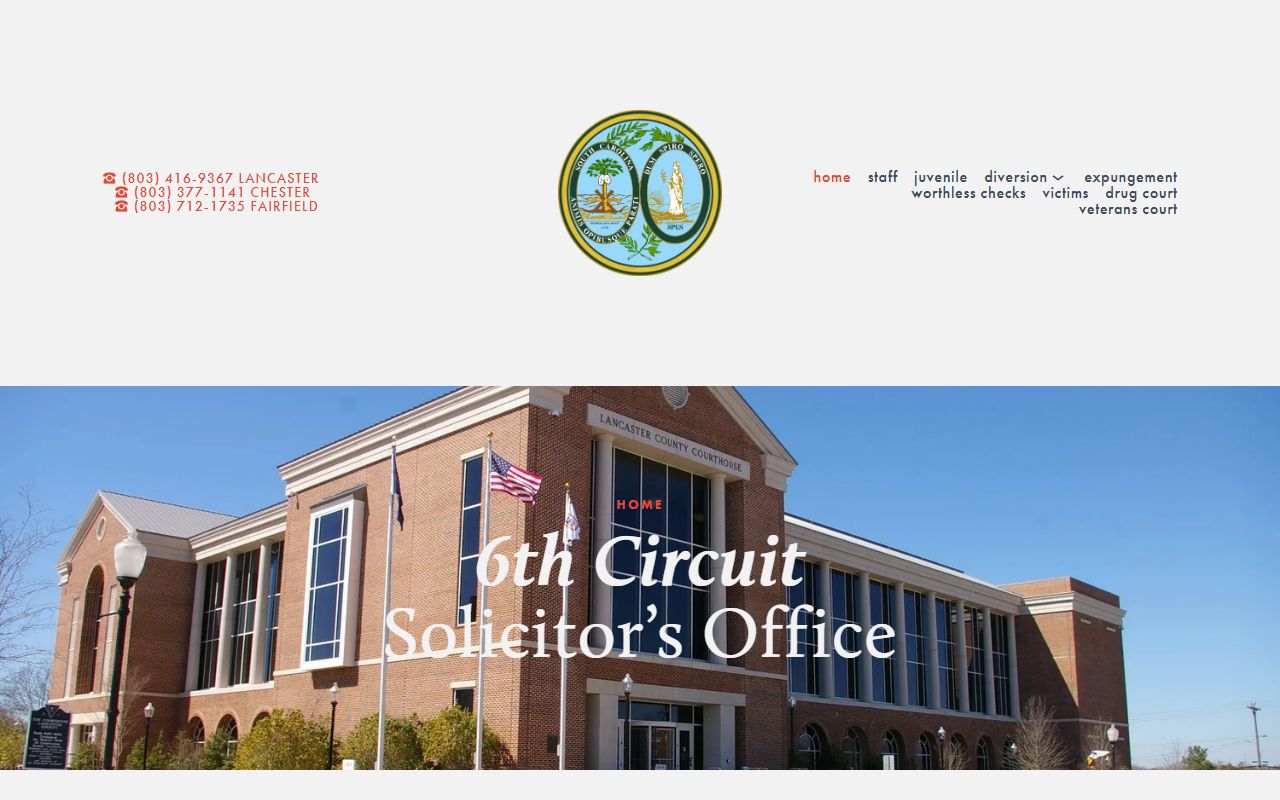
The solicitor's office is not a jail roster and does not provide legal advice, but it explains the prosecution channel that sits between arrest paperwork and criminal case outcomes.
Lancaster County Charging Documents
Charging documents are the papers that move the allegation into court. Lancaster County research points to tickets, warrants, complaints, solicitor filings, and grand-jury indictment as the practical path, depending on the level and court. A felony may begin with a warrant and bond hearing, then later move to General Sessions when the solicitor proceeds and indictment is sought.
| Document | Who Uses It | Common Role | Record Note |
|---|---|---|---|
| Complaint or ticket | Officer, court, or prosecutor | Starts or supports lower-level criminal proceedings. | May be tied to Magistrate or Municipal Court records. |
| Information | Prosecutor | Formal charging paper used when the solicitor proceeds without relying only on booking text. | Shows prosecution framing, not just jail intake wording. |
| Indictment | Grand jury process | Common route for serious General Sessions felony prosecution. | May appear after the jail booking and first bond events. |
Lancaster County Charge Status
Charge status can change many times after arrest. A pending charge is not a conviction. A charge can be amended, reduced, dismissed, or entered as nolle prosequi, which means the prosecutor declines to proceed. Some cases also show bench warrants or failure-to-appear entries if a defendant misses court.
| Status | What It Means | Why It Matters |
|---|---|---|
| Pending | The charge is open and unresolved. | Hearings, bond terms, and court dates may still change. |
| Amended or reduced | The charge wording or level changed after review. | The court record may differ from the jail roster charge. |
| Dismissed | The court ended the charge without conviction. | Public access may still exist unless sealing or expungement applies. |
| Nolle prosequi | The solicitor declined to keep prosecuting that charge. | It is a disposition, not proof the arrest never occurred. |
| Convicted or guilty | A plea or verdict resulted in conviction. | Sentencing or SCDC transfer may follow. |
Bond Records After Arrest
Bond information may appear in both the jail profile and the court record. Lancaster County's detention page posts bond-hearing times of Monday through Friday at 9:00 a.m. and 3:00 p.m., and Saturday and Sunday at 9:00 a.m. The roster may show Total Bond Amount, Total Bail Amount, and a bond grid. The court record may show bond orders, changes, conditions, or revocation.
| Bond Type | How It Works |
|---|---|
| Cash bond | Money or approved payment is posted to satisfy the release condition. |
| Surety bond | A licensed bondsman posts bond under South Carolina rules. |
| Personal recognizance | The person promises to appear without posting the full cash amount. |
| No-bond hold | No release amount is available at that point, often because of charge type, court order, or another hold. |
Lancaster County Warrants
No official searchable Lancaster County Sheriff's active-warrant database was located in the inspected source set. Do not treat social posts, rumors, or commercial lists as an official warrant search. A warrant can still lead to a booking, and related court records may show bench-warrant activity, failure to appear, or a bond status change after arrest.
Public channels are narrower for warrants than for roster records. If the person is booked, call the Lancaster County Detention Center at 803-313-2168 for custody-related questions. Search the court system for related cases. Contact the issuing Magistrate, Municipal, General Sessions, or Family Court when known. Active warrant information may be restricted for law-enforcement reasons, and resolving a warrant should go through the court, counsel, or lawful surrender.
Charges vs Convictions
An arrest record or pending charge is not the same as a conviction. Court records after a jail arrest can show accusations while the case is still open. A conviction requires a guilty plea, verdict, or other court outcome that establishes guilt. That difference is critical for reading Lancaster County criminal records fairly.
| Point | Charge | Conviction |
|---|---|---|
| Stage | Allegation after arrest or filing. | Final or accepted court outcome. |
| Proof level | Based on probable cause or charging decision. | Based on plea or proof beyond a reasonable doubt. |
| Public record | Often public unless restricted. | Often public unless restricted. |
| Custody impact | May affect bond and jail status. | May lead to sentence, probation, jail, or SCDC custody. |
Sealed vs Expunged Records
South Carolina public-record rules allow access to many criminal records, but not every record remains public forever. Juvenile records, sealed files, expunged cases, confidential personal information, and active investigative material may be restricted. An expungement is a legal process for qualifying records; it is not the same as asking a website to take down a search result.
| Point | Sealed | Expunged |
|---|---|---|
| Public visibility | Hidden or limited from ordinary public access. | Removed or treated under the expungement order as qualifying law allows. |
| Record source | May still exist with the court or agency under restricted access. | Handled under South Carolina expungement statutes and court orders. |
| Best channel | Ask the clerk or agency how the seal affects access. | Use the court and agency process tied to the expungement order. |
| Limits | Does not always erase all agency history. | Does not guarantee every third-party copy disappears instantly. |
The South Carolina expungement statutes are the legal source for clearing qualifying criminal records.
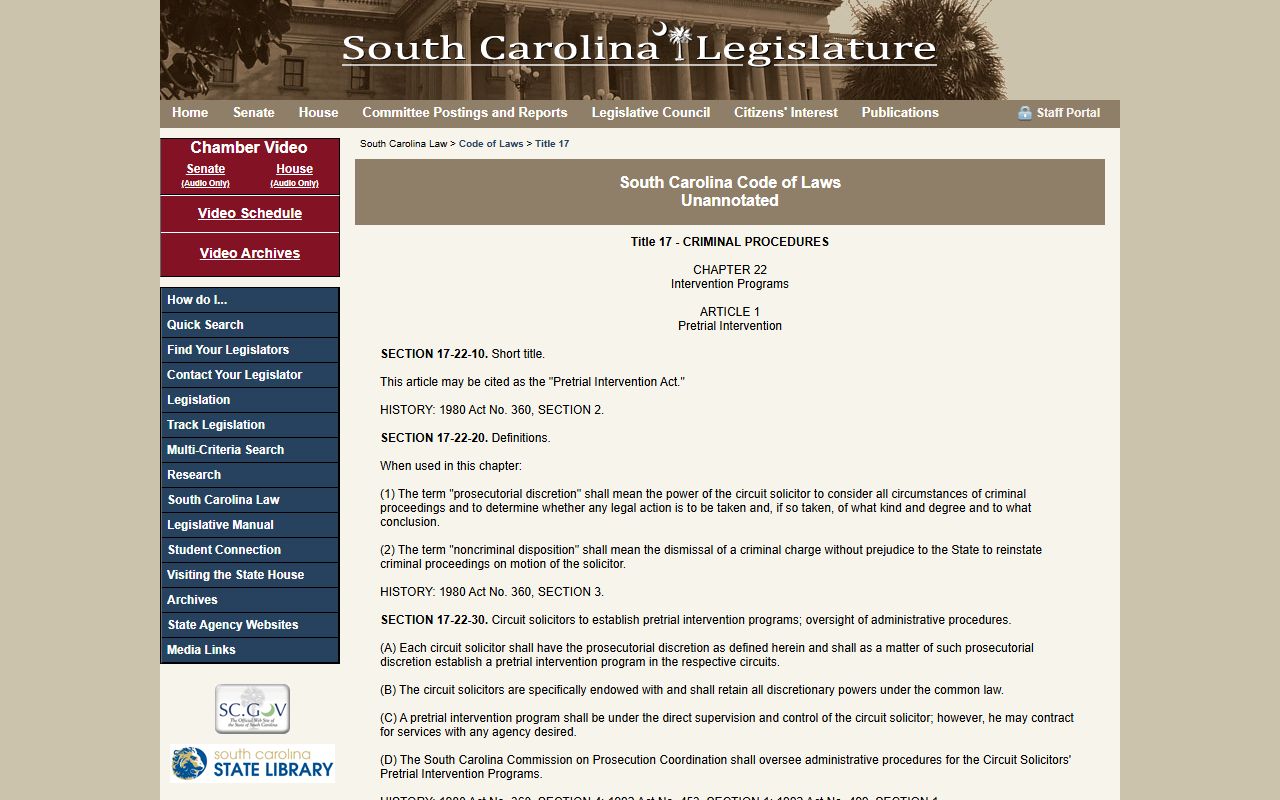
Expungement questions should be checked against the court file, the statute, and any order signed in the case, because eligibility depends on the disposition and record type.
Lancaster County Public Access
South Carolina FOIA broadly governs public records held by South Carolina public bodies, subject to exemptions. For court records after a Lancaster County arrest, use the Judicial Branch portal or the court clerk first. For jail-side records, use the jail roster and Lancaster County NextRequest. For prosecution context, use the Sixth Circuit Solicitor, especially for victim services or prosecution-stage questions.
Older court records or files not shown online may require a clerk request. Ask for the case number if known, defendant name, charge, court, and date range. If the issue is prosecutor action rather than the public court docket, the solicitor's office may be the better routing point, though that office cannot act as a legal adviser for a defendant or family member.
Access note: S.C. Code Title 30, Chapter 4 supports public-record access but allows exemptions for active investigations, confidential records, juveniles, sealed records, and privacy-protected material.